Your technology worked once. It may no longer work for where the business is going.
Modernisation is about making the technology fit the business again — without replacing everything simply because it’s old.
The system still works — but everything around it has become harder
Common signs, not a diagnosis — most businesses recognise one or two of these, not all of them.
Every change takes longer than it should.
People have developed workarounds for the software, instead of using it as intended.
A small change in one place creates problems somewhere else.
Nobody wants to touch parts of the system anymore.
The business has outgrown the assumptions the system was originally built around.
Important information is trapped across old or disconnected systems.
We don’t start by deciding what to replace.
We start by understanding what exists, what the business actually depends on, and what’s really causing the friction or the risk — then separate what should stay from what needs to change. Replace what needs replacing. Improve what can be improved. Leave what already works alone.
A tool bolted on top of a process that’s still broken just makes the same problem digital. Before we touch any code, we make sure we understand the process it’s meant to support — not just the software running it today.
What we actually look at
Not a checklist — the specific question each of these answers for the business.
Architecture
Can the system evolve without every change becoming a structural problem?
Business workflows
Does the system match how work actually happens, or does work have to bend around the system?
Data
Can the business trust and use the information the system holds?
Integrations
Does the system work with the other systems the business already depends on?
Security & access control
Are sensitive business and customer records appropriately protected, and does access match what people's roles actually require?
Performance
Does the system continue to behave properly as usage and complexity increase?
Observability
Can the team understand what's happening when something goes wrong?
Testing & deployment
Can the organisation change the system safely, without relying on manual checks for everything?
A reasoned process, not a rewrite by default
Different from how a new build gets scoped — modernisation starts with what already exists.
01
Assess
Understanding the existing system as it actually is — not assuming what's wrong with it yet.
02
Understand
What the business depends on, and where the real friction or risk actually sits.
03
Prioritise
Deciding what actually matters, weighed against what the business depends on most — not a fixed technical wishlist.
04
Modernise
Work performed around business and technical priorities together, not a generic playbook applied regardless of context.
05
Validate
Making sure the changes work before they become the next problem.
06
Operate
This is where modernisation is actually proven — a system that works in a handover meeting and struggles in daily use hasn't been modernised. It's been rebuilt.
What happens to the business while this is happening?
Modernisation doesn’t have to mean switching off what’s running today and starting again. Where it makes sense, changes are approached in stages — data migration gets planned carefully before anything moves, and what needs to keep running keeps running while the rest changes underneath it.
Technology changes how people work — that’s part of the job, not an afterthought
A modernised system nobody actually uses hasn’t solved anything. Where adoption matters, we start with the people who’ll actually use it, not just whoever approved the change — training by role rather than one generic session, and staying closest in the first few weeks after go-live, when the real questions surface.
Read more on why this decides adoption →Not theoretical — modernised
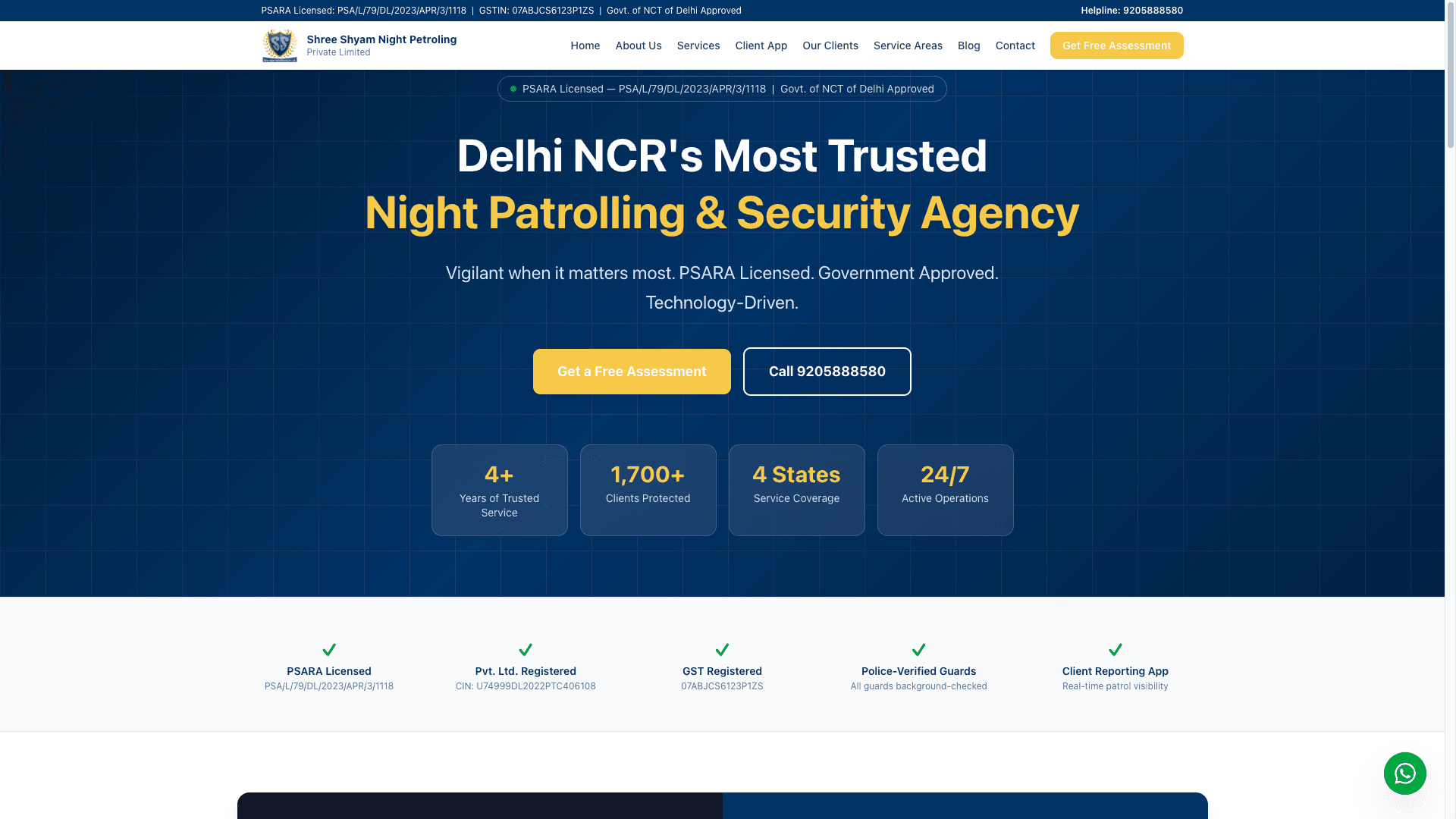
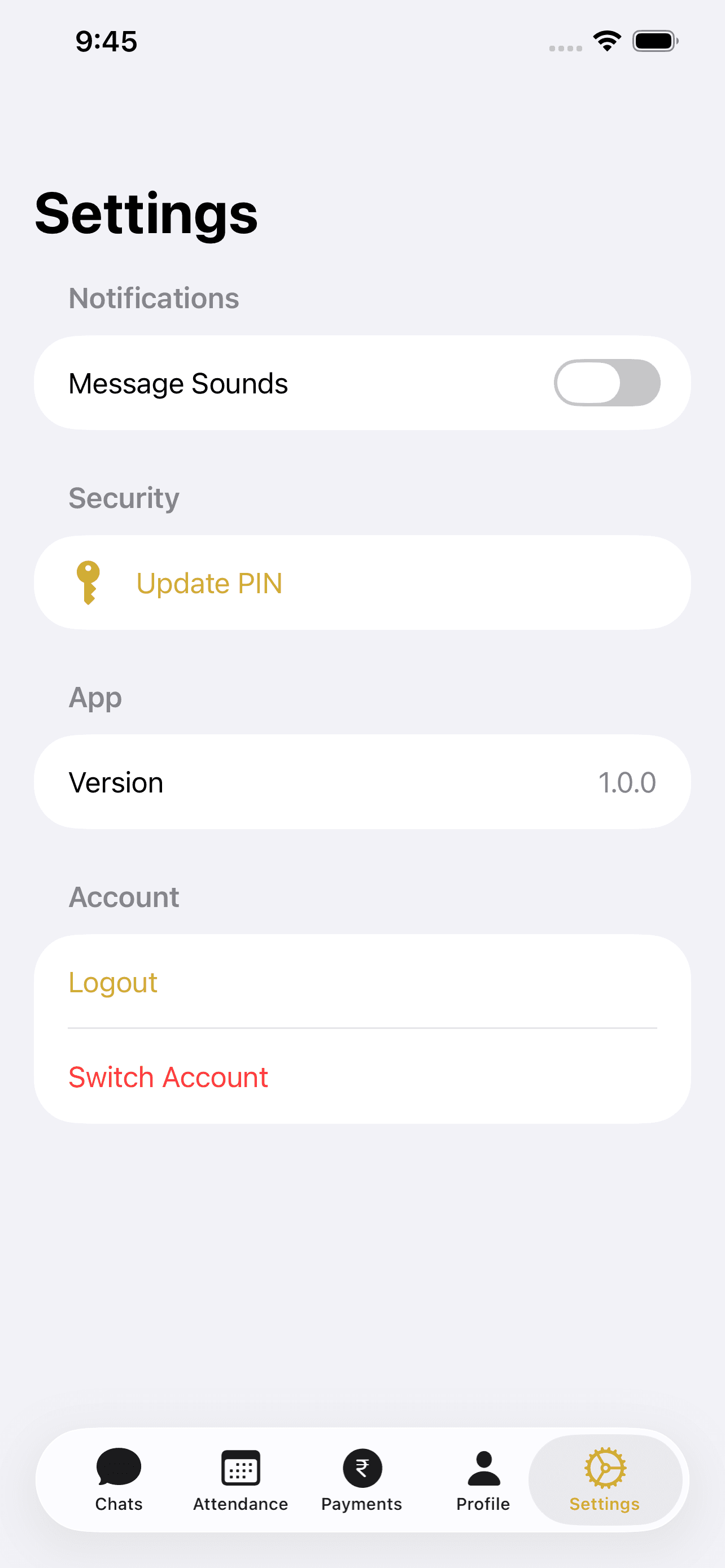
SS Night’s entire operation ran on personal WhatsApp accounts. We rebuilt it as one platform.
Field reports, CCTV clips, incident photos, and over a thousand invoices — all manual, all fragile. Accounts kept getting blocked. Reports disappeared. WhatsApp account blockages stopped on launch day. Clients now receive reliable, timestamped reports with a full history instead of scattered messages. The operations team no longer runs the business through personal phones. Billing automation removed a manual process that previously consumed significant management time. SS Night has remained an active client since launch, and Deepak remains their primary point of contact.
1,000+
Client accounts
4
Months to build
18
Field employees on the app
5
Products delivered

What this looks like, concretely
A simplified sales example, about how the business worked, not just which tools changed — we do the same kind of work across operations, finance, and customer service.
Before — working around the system
- A new lead comes in by WhatsApp or phone — written in a notebook, or remembered
- Follow-up depends on whoever took the call remembering to do it
- A proposal goes out as a WhatsApp screenshot, with no way to know if it was read
- An invoice gets typed up by hand and chased manually if it's late
- There's no record of the customer's history — every interaction starts from scratch
After — the system supporting the work
- The lead is captured automatically, from whichever channel it came in on
- A follow-up reminder is assigned automatically, with full context attached
- The proposal goes out with open-tracking, so you know it was seen
- The invoice is generated and sent automatically when the deal closes
- The full customer history is in one place, for anyone who needs it
Why give this to Ishvera
Modernising an existing system isn’t only a rewrite exercise. It means understanding what the business actually depends on, what the existing technology already does — badly or well — and how the pieces around it connect, before touching anything. Deepak leads every engagement personally, bringing in specific technical expertise project by project, so the work gets real engineering depth alongside continuity of who’s accountable for the outcome, from assessment through to the system running in production.
How we’re built →What happens after “yes”
The first conversation is about understanding the current environment and what’s actually causing friction — not agreeing to a fixed programme of work. What gets modernised, and in what order, gets defined together, based on what the business actually needs changed.
See how we work →Where we’re probably not the right fit
— The existing system genuinely works, and there's no meaningful change to make.
— The only objective is to make something look newer.
— The lowest-cost implementation is the overriding requirement.
— There's no real business or operational problem to solve — just a preference for new.
We’d rather tell you this doesn’t need us than find a way to make it sound like it does.
Is your technology becoming the constraint?
Tell us what's no longer working the way it should. We'll help determine what needs to change — and what doesn't.