
Ishvera Store
A real customer-facing storefront, and behind it, a merchant dashboard for products, orders, inventory, and customers — one platform, not a website with a shopping cart bolted on.
What it is
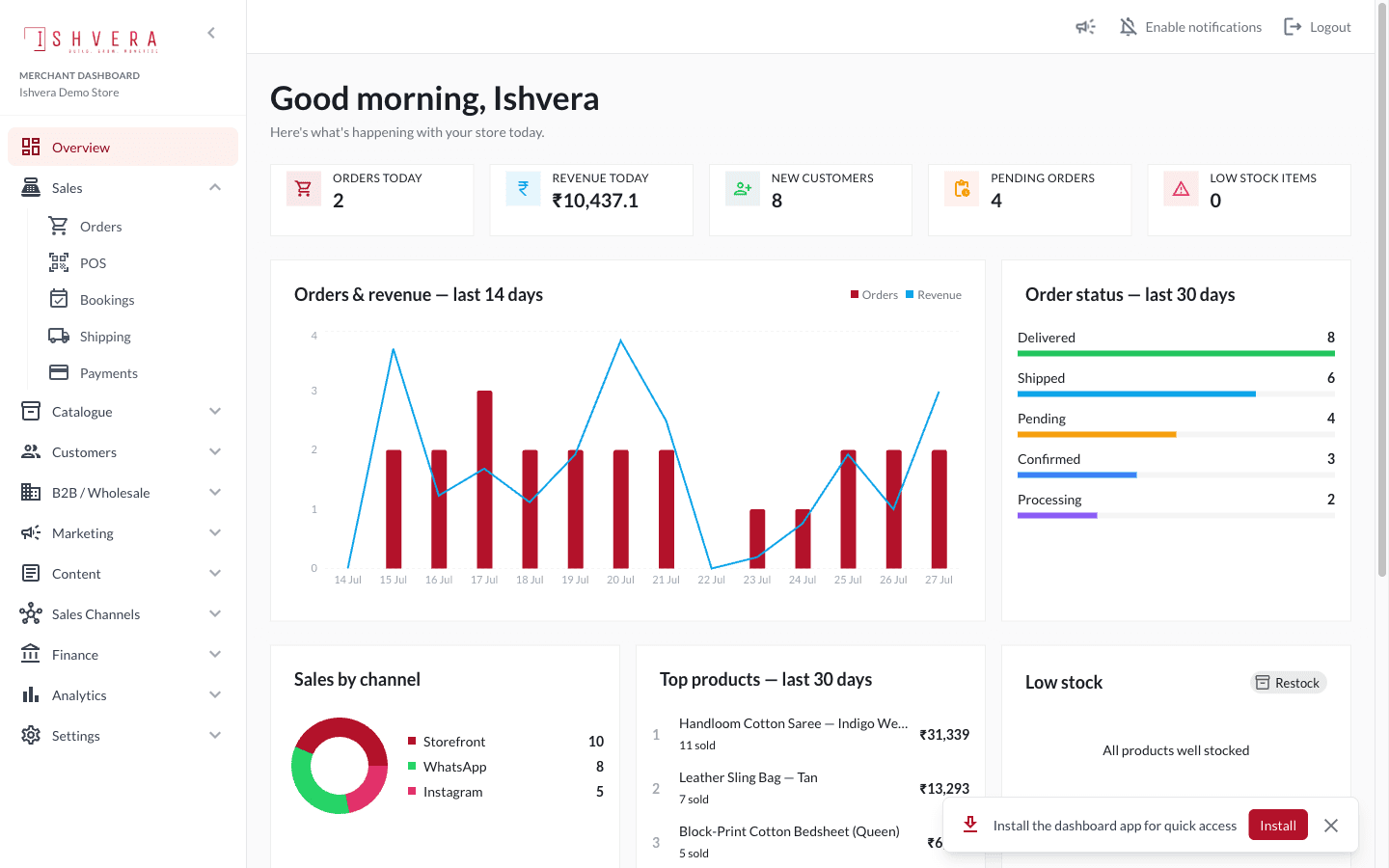
A multi-tenant commerce platform: a merchant dashboard for managing products, orders, and customers; a storefront for the merchant's shoppers; an admin console for platform operations; and the API that connects all of it. It's in production today.
- Merchant dashboard
- Storefront
- Admin console
- API
Why we built it ourselves
Most of what we build is for clients. Ishvera Store is the exception — a platform we own end to end, which means the standards described in How We Work aren't just what we tell clients we do. They're what we run our own product on: access control between merchants who share the same platform, monitoring that tells us when something's wrong before a merchant does, and an architecture built to take on more merchants without a rebuild. Engineering describes those standards in full.
Merchant dashboard
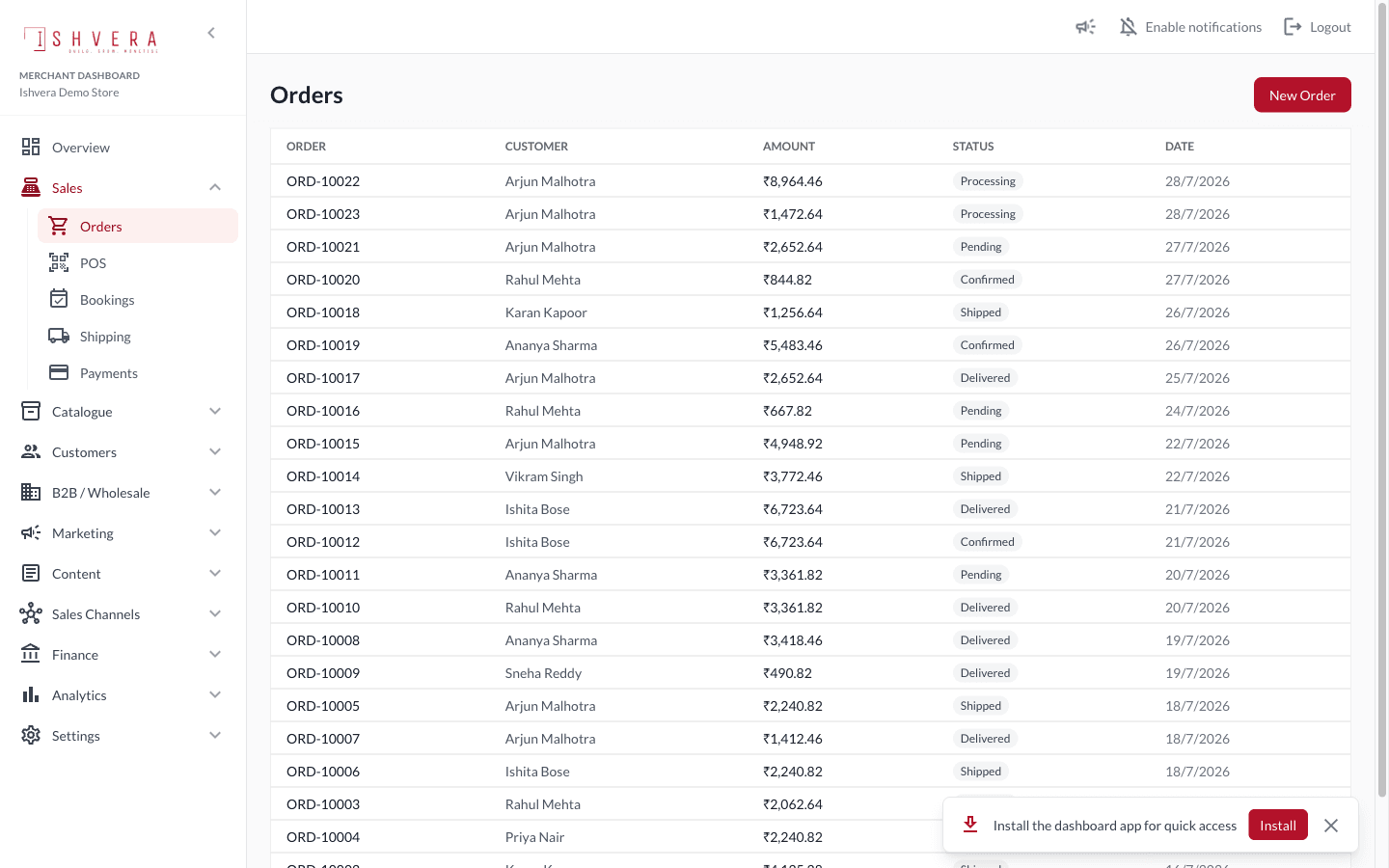
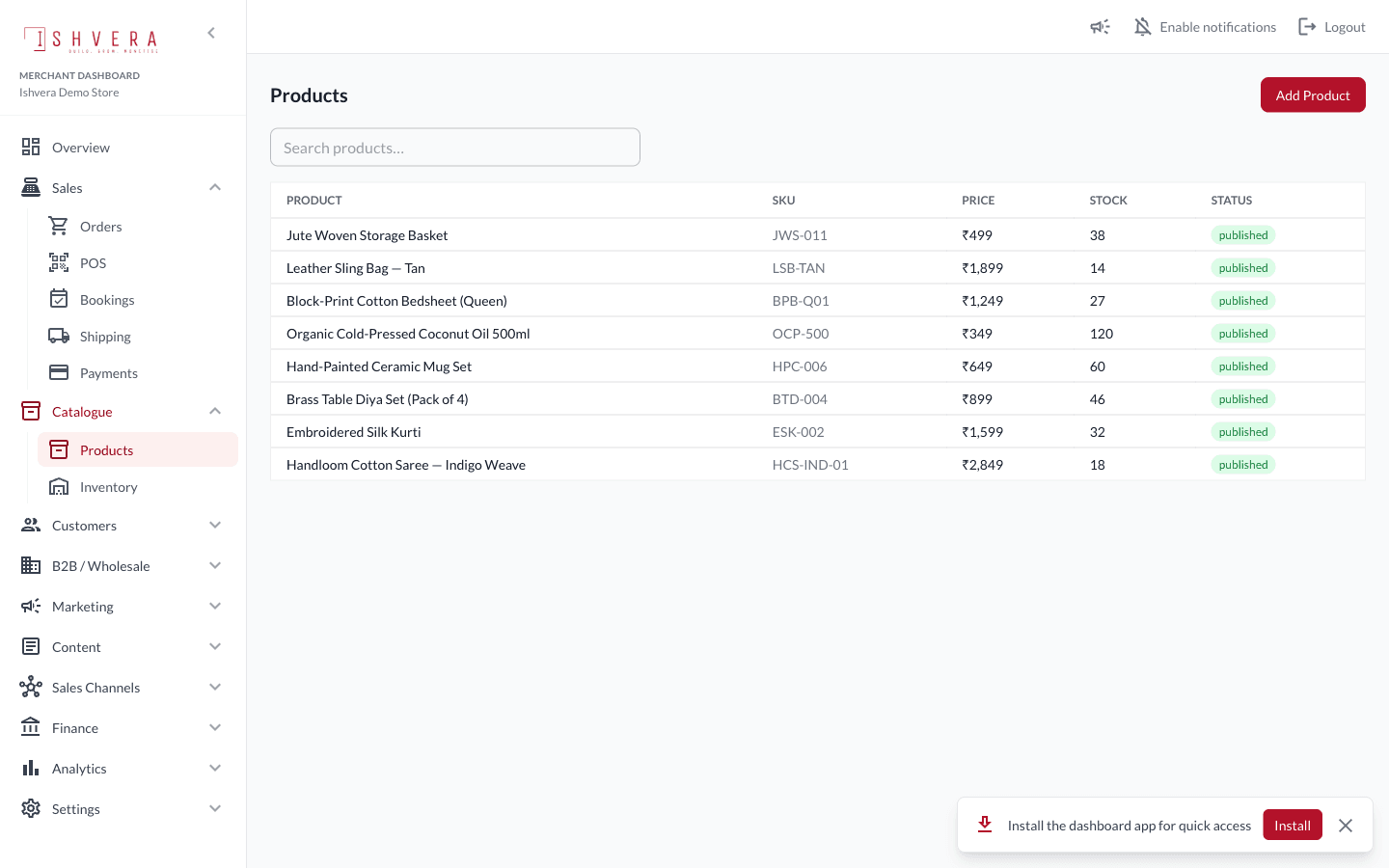
Products, orders, customers, inventory, and analytics — the control room behind the storefront.
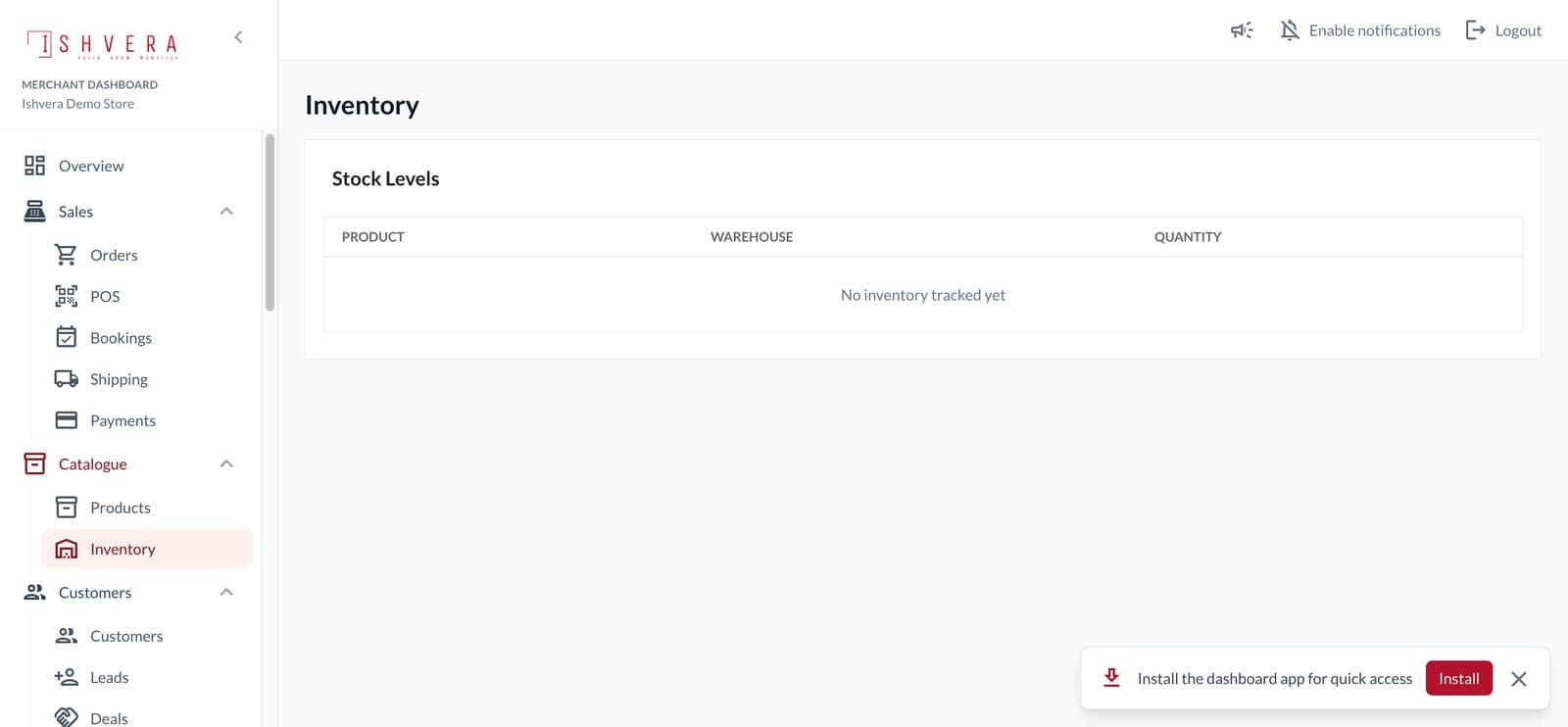
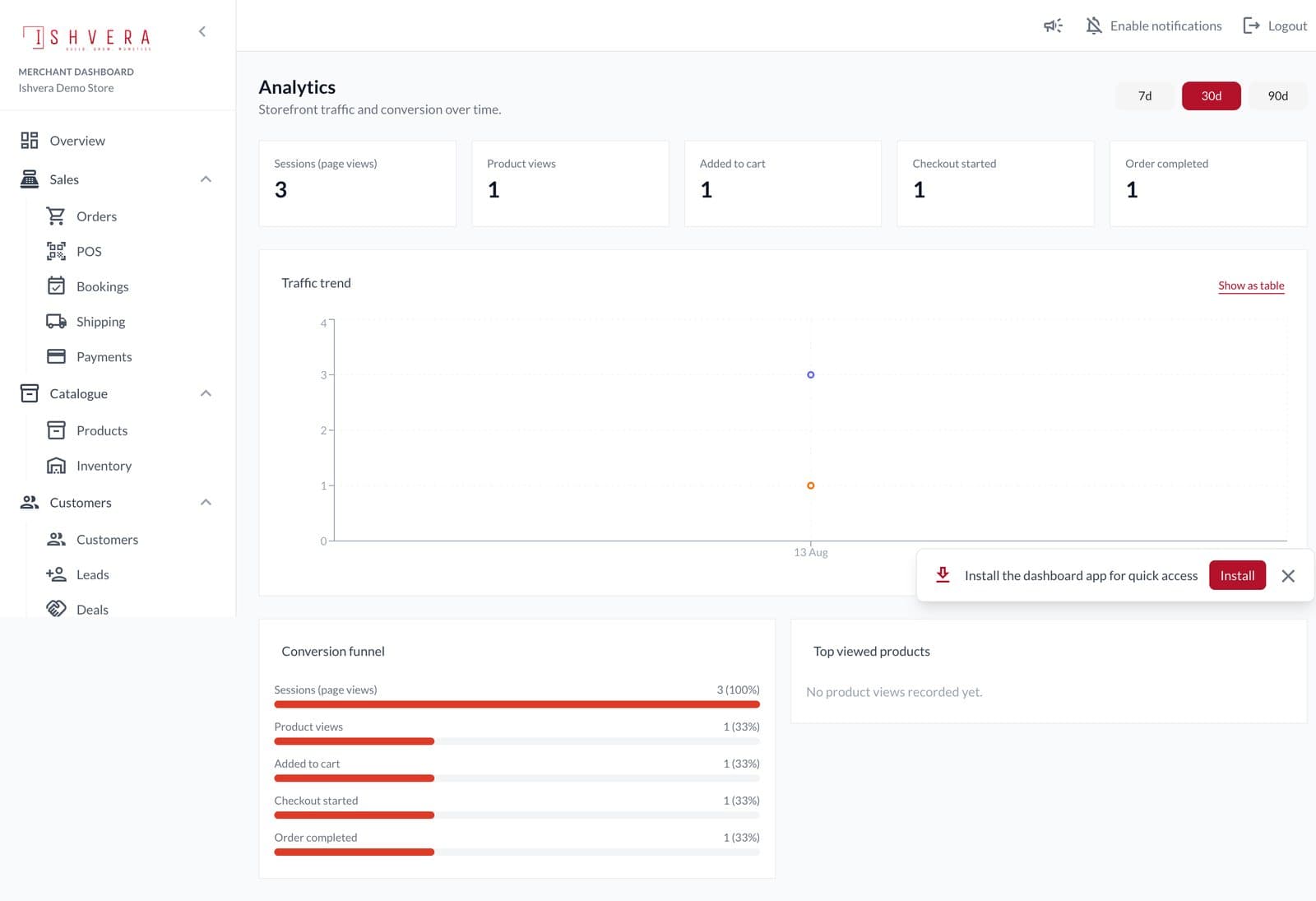
Beyond the storefront
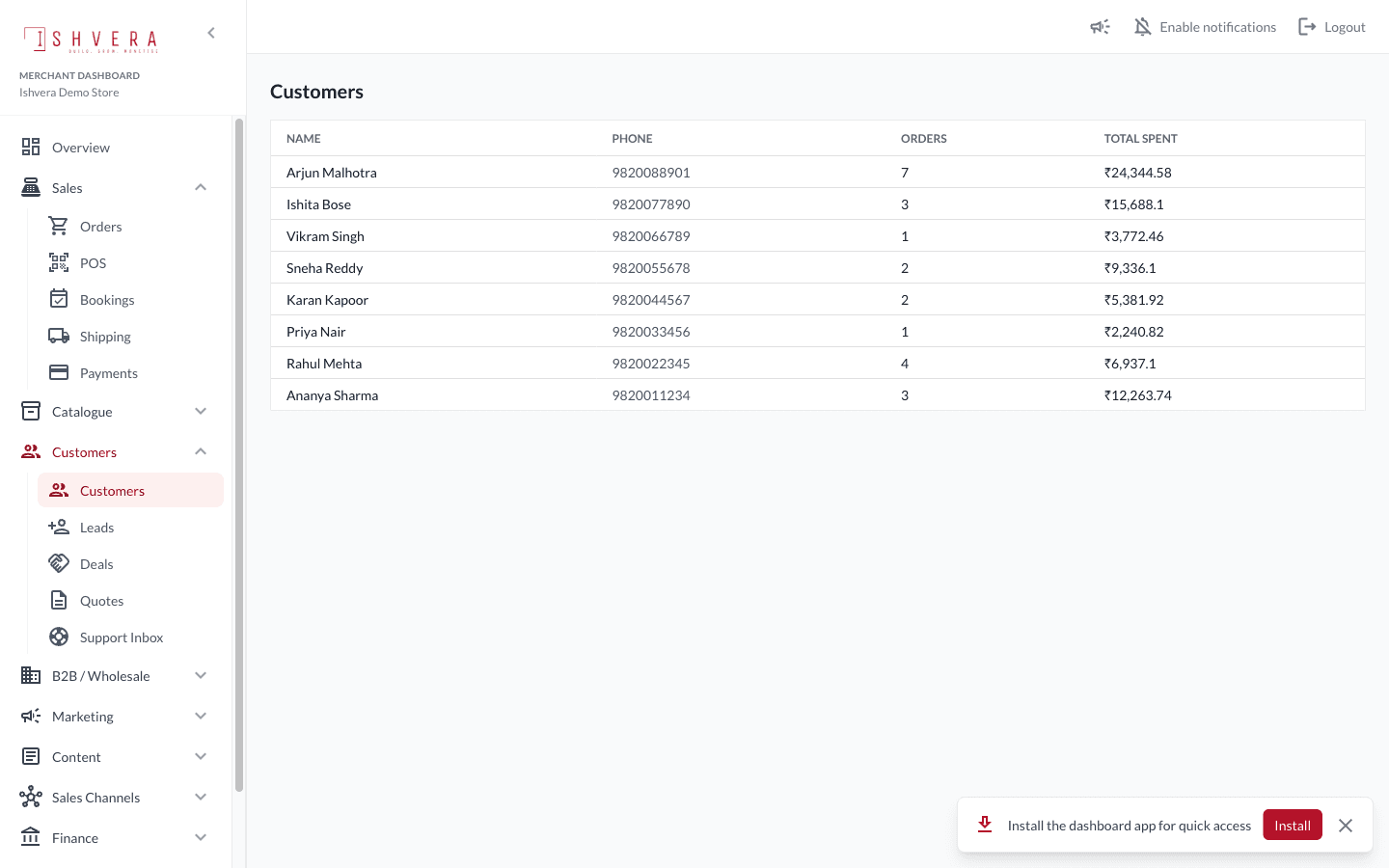
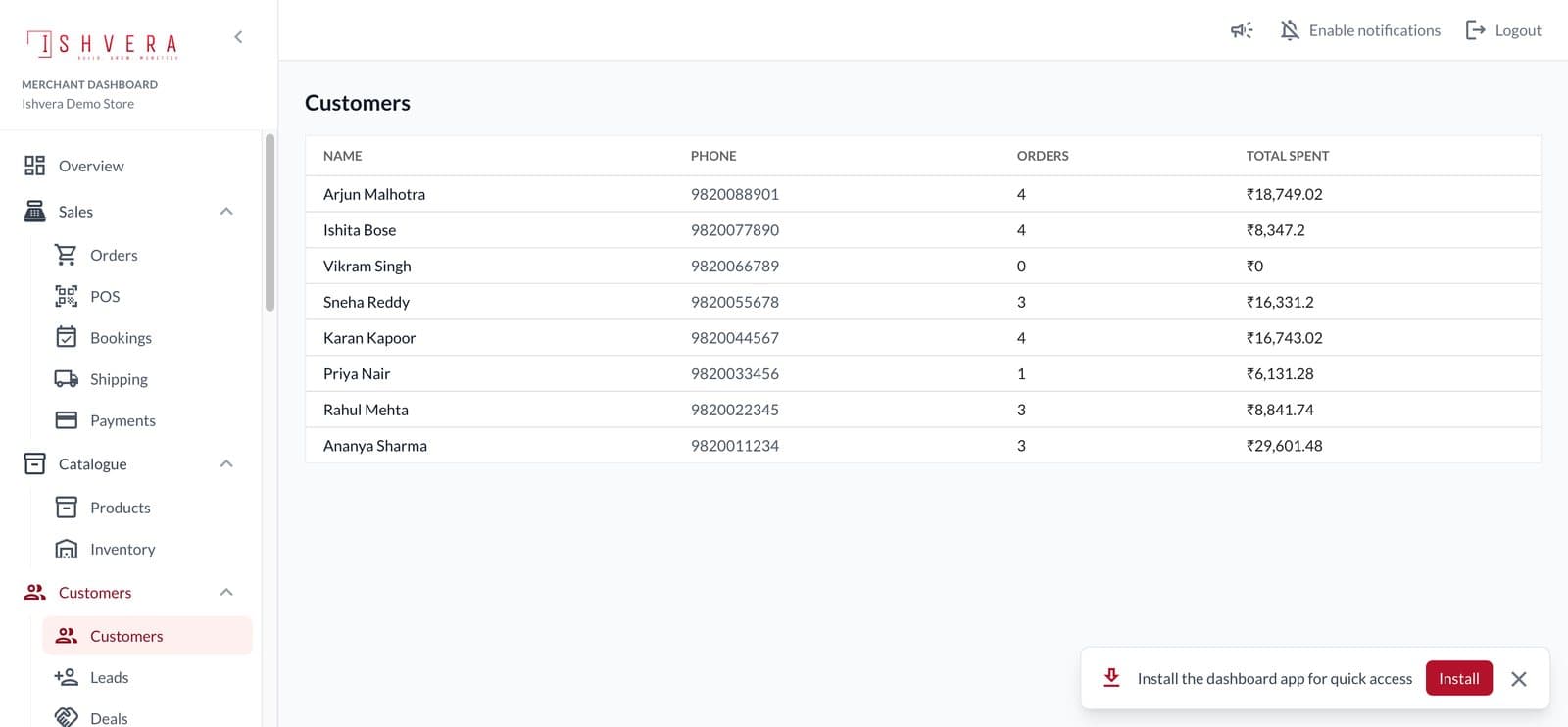
Every customer's history, without digging
Name, phone, total spend, and a full order history for anyone who's ever bought from the merchant — the start of a real CRM, not a static contact list. It sits alongside a leads pipeline, a deals board, and a support inbox for the conversations that happen before and after a sale. Most store-builder products don't have any of this — Ishvera Store treats customer relationships as part of running the business, not an afterthought bolted on for support tickets.
Real third-party integration
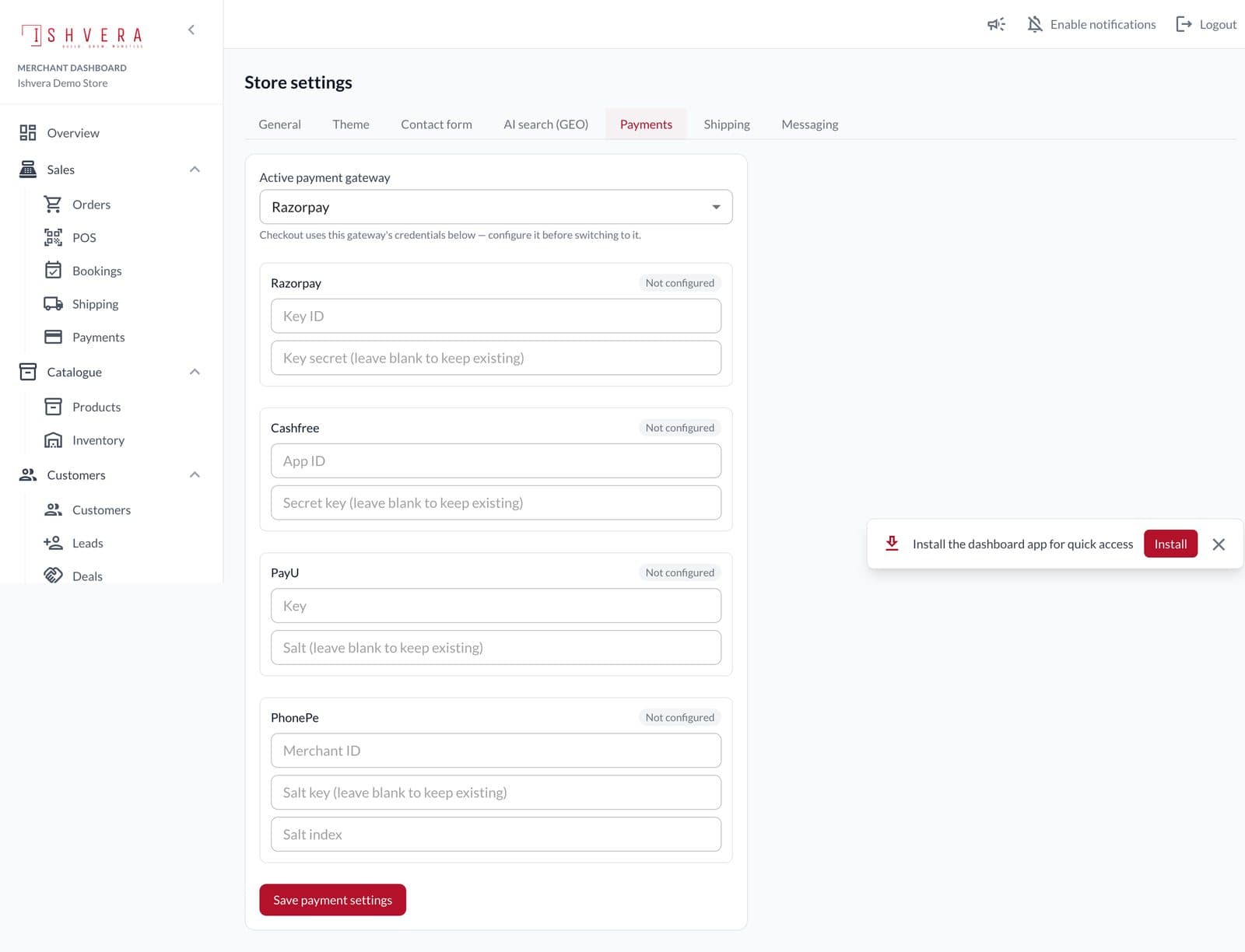
Your own accounts. Nothing routed through ours.
Merchants connect their own Razorpay, Cashfree, PayU, or PhonePe account for payments, and their own Shiprocket, Delhivery, Dunzo, or Porter account for shipping — keeping the relationship, the rates, and the payout schedule they already have. UPI, cards, netbanking, wallets, and Cash on Delivery all settle straight into the merchant's own bank account. When it's time to ship, a courier gets booked and a label generated without leaving the order screen — the same accounts a merchant would use anywhere else, just connected directly to their store.
The customer-facing storefront
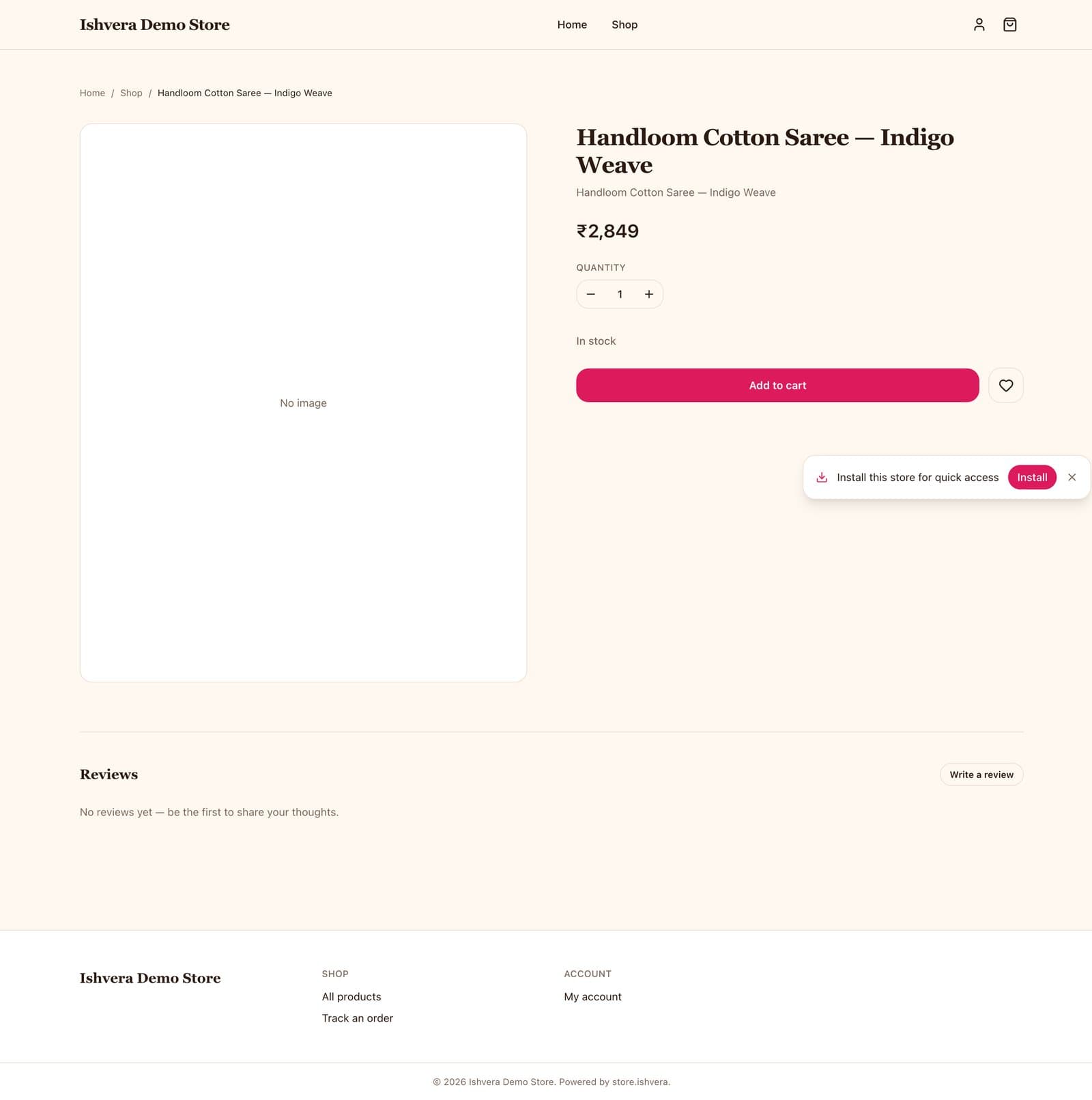
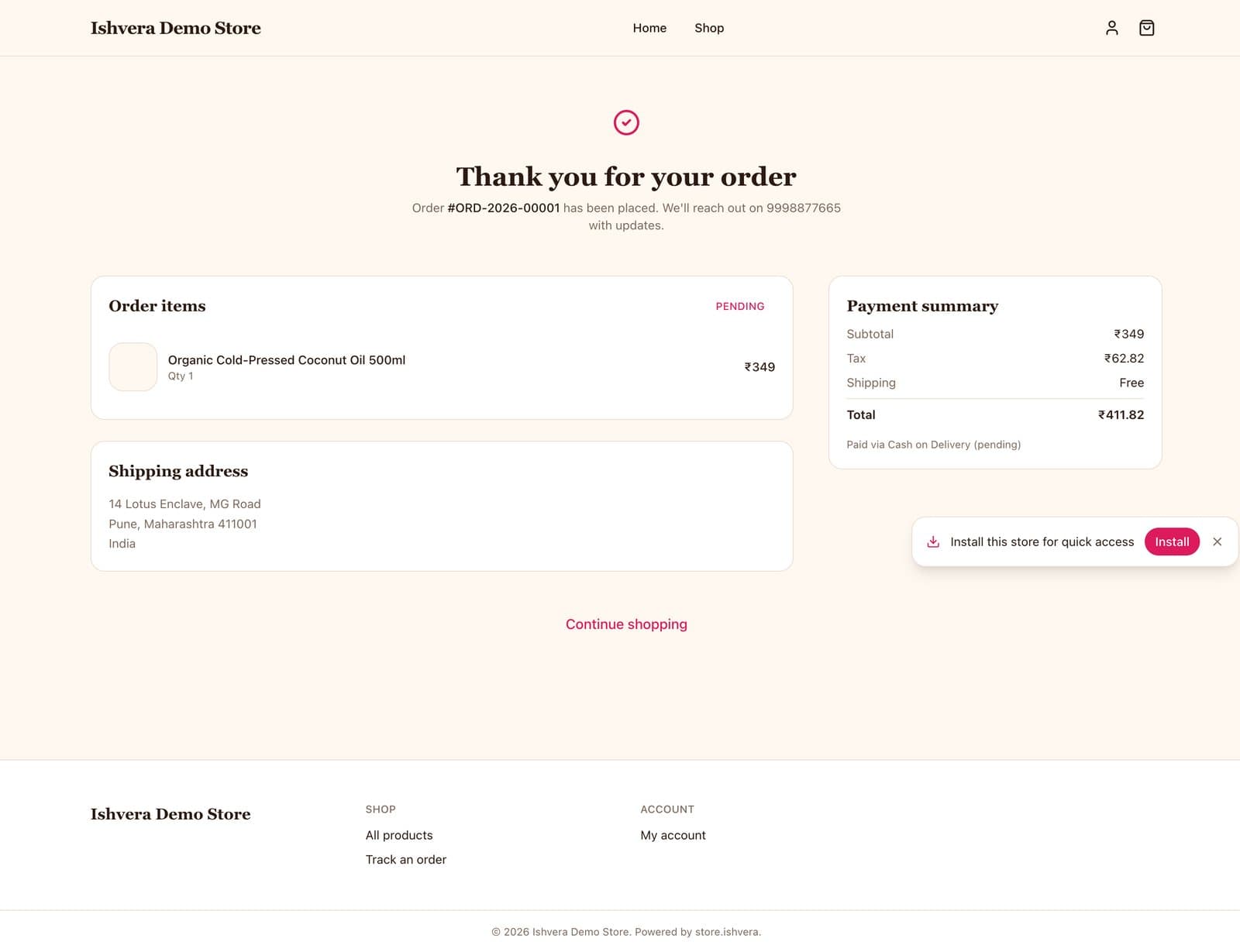
Most store builders stop at the storefront. This is the other half — what the merchant’s own customers see.
Say it in five seconds. Or thirty.
A commerce platform we designed, built, and operate ourselves.
Most store builders stop at the storefront. Ishvera Store doesn't. Customers get a fast, searchable shop with cart, checkout, and order tracking. Merchants get a dashboard that runs everything behind it — inventory, an order pipeline, their own payment and shipping accounts, and AI tools that write product listings in six languages. It's a platform we operate ourselves, to the same standard described in How We Work.
A real, shipped AI feature
Product listings can be written and translated into six Indian languages from inside the dashboard — a real, shipped feature, not a demo. It exists because merchants asked for it, not because we wanted an AI feature on the page.